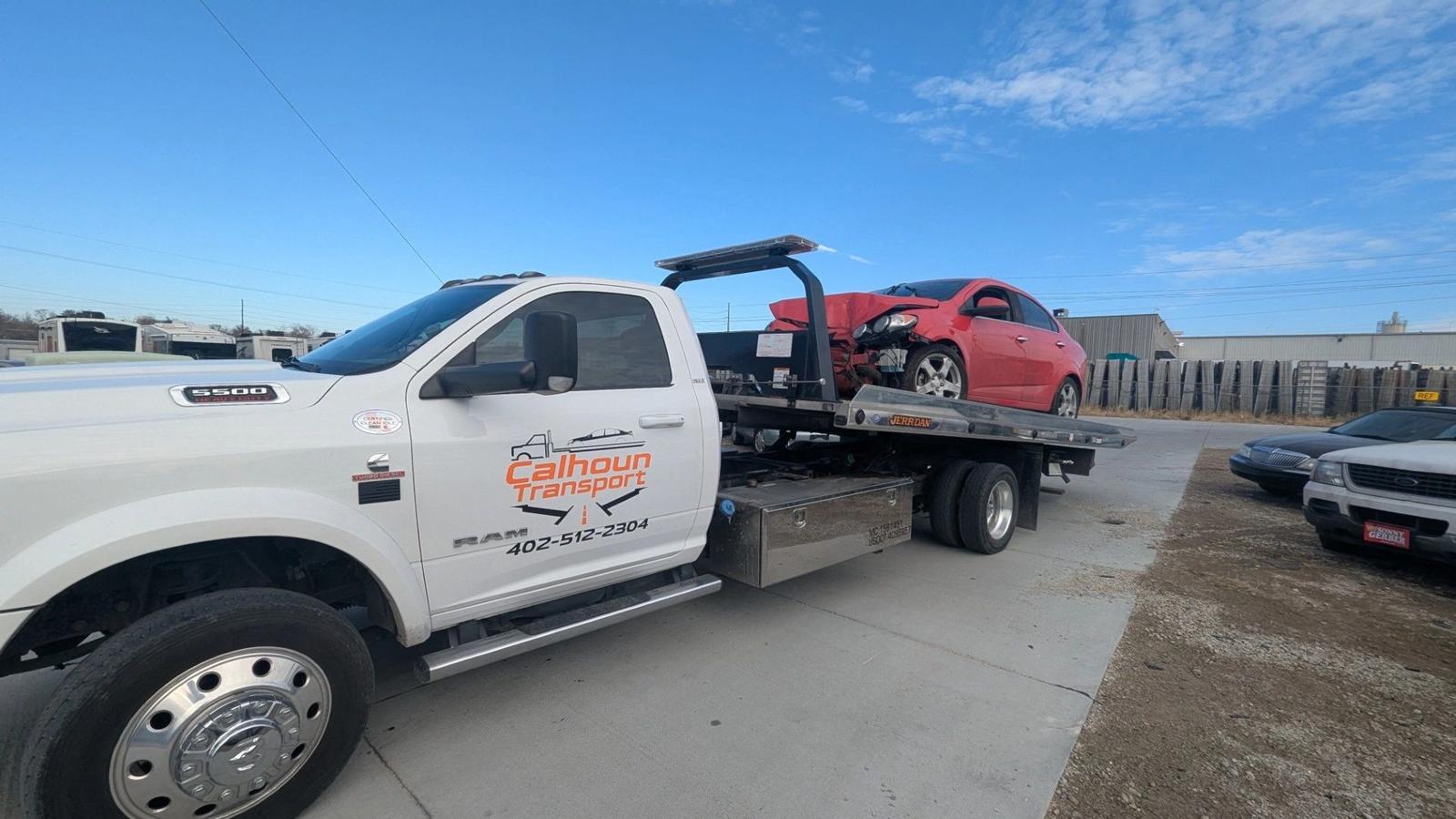
The first few minutes after a crash are the ones people remember least clearly, which is exactly when the order of operations matters most. Get everyone checked for injuries, get the vehicles out of the travel lane if they can be moved safely, and get the scene documented before anything else happens. Everything after that, the tow, the claim, the repair estimate, moves faster if those first steps are done right.
Check for injuries before you check the vehicle
Adrenaline hides pain. Someone can walk away from a crash and not notice a real injury until an hour later. If there's any doubt, call 911 and let paramedics make that call rather than deciding on the shoulder of the road. This matters more on rural stretches near Fort Calhoun, where the nearest urgent care isn't a five minute drive and a delayed symptom has further to travel before it gets looked at.
Move to safety if the vehicles are drivable
If the vehicles can be moved and nobody is hurt, get them off the roadway and onto the shoulder or a nearby lot. A car sitting in a travel lane, especially on a rural highway where drivers aren't expecting a stopped vehicle, is a second accident waiting to happen. Turn on hazard lights immediately, whether the vehicle moves or not.
If a vehicle can't be moved, or moving it isn't safe, stay clear of traffic and wait for law enforcement rather than trying to push or wave anyone through. Standing between two vehicles or in a live lane to swap information is one of the more common ways a minor accident turns into a second, worse one.
Call the police, even for a minor accident
A police report matters more than it seems like it should in the moment. Insurers use it to establish what happened, and without one, a claim can turn into two drivers describing the same accident two different ways with nothing to settle the disagreement. Get the responding officer's name and the report number before they leave.
On a rural county road, response time can run longer than it would in town. That's not a reason to skip the call. It's a reason to use the wait productively: document the scene, check on everyone involved, and get somewhere safe while you wait for the officer to arrive.
Document the scene while it's still in front of you
Photos are worth more than a written description, because a description written an hour later starts to smooth over details that mattered. Get the damage to both vehicles, the position of the vehicles relative to the road, any skid marks, and the surrounding area, road signs, intersections, anything that shows conditions at the time. Exchange insurance information, names, and phone numbers with the other driver. If there are witnesses, get their contact information too. They may not stick around once the police arrive.
What your insurer actually needs
Every insurer wants the same basic set of facts: the police report number, photos of the damage, the other driver's insurance information, and a timeline of what happened. Call your insurer the same day if possible, while the details are still fresh. Waiting a few days to "figure out what happened first" tends to make the call harder, not easier, since the story gets less precise with time rather than more.
Be factual when you describe the accident. Stick to what you saw and did, not what you think caused it. Fault determination is the insurer's and the police report's job, not something to work out on the phone with a claims adjuster.
When the vehicle needs a tow
A vehicle with front-end or side damage isn't always safe to drive, even if it starts and the wheels turn. A damaged radiator, a compromised wheel alignment, or a cracked frame can turn a short drive home into a bigger problem than the accident itself. If there's visible damage beyond a scuff or a dent, or if a warning light comes on that wasn't there before, accident recovery is the safer call than driving it yourself.
We load the vehicle onto a flatbed rather than towing it behind another vehicle, which avoids putting additional stress on parts that may already be compromised. For a vehicle that's still drivable but you'd rather not put more miles on it before an adjuster sees it, flatbed towing works the same way.
Damage that isn't obvious from the outside
Some of the damage that matters most after a crash doesn't show up in a walkaround. A frame that's been pushed slightly out of alignment, a radiator with a hairline crack, or a sensor that got jarred loose can all look fine from the driver's seat and still be a real problem a mile down the road. This is part of why "it still drives" isn't the same question as "it's safe to drive." If the accident involved any real impact, not just a tap in a parking lot, it's worth having it looked at before putting more miles on it.
How vehicle storage works after an accident
If a vehicle can't go home or to a body shop right away, whether that's because the owner is at the hospital, the shop is booked out, or the insurer needs to inspect it first, it needs somewhere secure to sit in the meantime. We can hold a vehicle until the owner, the shop, or the insurance company is ready for it. Ask about this up front if you know the vehicle won't be picked up the same day, since it saves a second call later.
After the tow: what comes next
Once the vehicle is somewhere safe, the next steps are between you, your insurer, and a body shop. Get a repair estimate before authorizing work if the damage looks significant. If the insurer's adjuster and the shop disagree on scope, that's a normal part of the process, not a sign something's gone wrong. Ask the shop to put any disagreement in writing so it's clear what was and wasn't approved before work starts.
Frequently Asked Questions
Should I move my car after an accident?
Yes, if it's drivable and nobody is hurt. Getting vehicles off the roadway, especially on a rural highway, reduces the risk of a second accident. If the vehicle can't be moved safely, stay clear of traffic and wait for help instead.
Do I need a police report for a minor accident?
It's worth calling regardless of how minor the damage looks. A police report gives your insurer an independent record of what happened, which matters if the other driver's story doesn't match yours later.
How do I know if my car needs to be towed instead of driven home?
Visible front-end or side damage, a new warning light, fluid leaking underneath, or anything that changes how the car handles are all reasons to have it towed rather than risk driving on a compromised frame or suspension.
What information should I exchange with the other driver?
Names, phone numbers, and insurance information at minimum. Photos of their license plate and insurance card are a fast way to make sure the details are accurate.
Can you store my vehicle until my insurance adjuster sees it?
Yes. If the vehicle can't go straight to a body shop or back home, we can hold it securely until the owner, shop, or insurer is ready for it.
What if the other driver leaves before police arrive?
Get as much information as you can, their plate number, vehicle description, and any photos, and report it to the responding officer as a hit and run. This is part of why documenting the scene right away matters even before the police get there.
If you're dealing with an accident near Fort Calhoun or anywhere else we cover, contact us and we'll get a flatbed out to you.