Services
Accident Recovery and Vehicle Storage
Careful recovery after a collision, secure storage while the claim is sorted out, and straight paperwork for whoever is handling it.
Careful recovery after a collision, secure storage while the claim is sorted out, and straight paperwork for whoever is handling it.
Accident recovery is towing a vehicle that has already been damaged, without adding to the damage on the way. Calhoun Transport handles collision recovery and vehicle storage across the Omaha metro and Washington County, Nebraska. It is a different job from a breakdown, because the vehicle usually cannot roll, cannot steer, and is sitting somewhere it should not be sitting.
It is also the call people make on the worst day they have had in a while. Nobody schedules this. So the useful things we can do are arrive without adding chaos, get the vehicle off the road so traffic stops being a hazard, and give you paperwork that whoever handles your claim can actually use.
If police or emergency services are on scene, they run the scene and we work to them. If you are calling from the roadside yourself, the first thing to sort out is whether you are somewhere safe, and the vehicle is the second thing.
After a collision the assumption that a vehicle rolls freely usually stops being true. Suspension geometry gets bent, a wheel sits at an angle it was never meant to, a tie rod lets go, brake lines tear, or the bodywork is folded down onto a tire. Any of those turns a routine hookup into something that will drag and gouge.
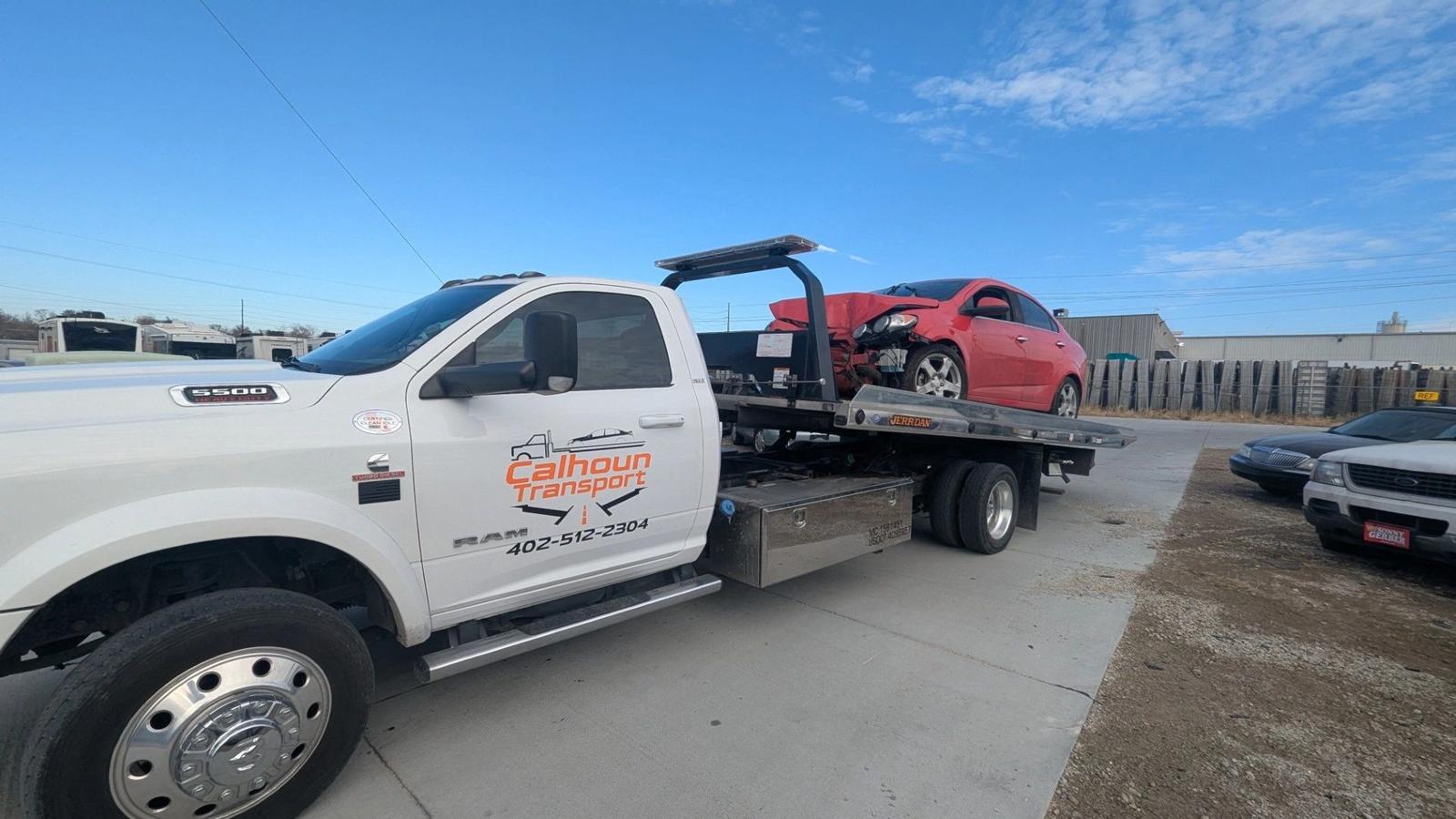
A flatbed removes the question. The vehicle is winched onto the deck rather than rolled onto anything, and it travels with all four wheels off the road. Nothing that is already broken gets worked further on the way to the yard, which matters more than it sounds, because an insurance assessment is easier when the only damage on the vehicle is the damage from the collision.
It also keeps loose debris contained. A car that has been hit is shedding glass, plastic and fluid, and having it up on a deck rather than rolling down the road is the difference between a clean recovery and a second call to somebody about the mess.
Lights on early, the truck positioned to shield the work, and loading done from the side away from live traffic wherever the geometry allows it.
A vehicle with a bent wheel or a locked brake gets pulled onto the deck under control. Nobody is shoving a wrecked car around on a shoulder.
The glass and plastic where the vehicle was sitting gets picked up rather than left for the next driver through.
Somewhere for the vehicle to sit while the claim moves, rather than in your driveway leaking onto the concrete.
Where the vehicle was picked up, where it went, when, and who released it. Adjusters ask for exactly this and it is easier to write down at the time.
Coverage runs on the vehicles being hauled, not just on the truck hauling them. Ask on the phone if you need the specifics for a claim or a dealer arrangement.
Body shop, dealer, salvage buyer or back to you. We move it again when the decision is made.
Out of the traffic lane and behind a barrier if there is one. The vehicle is a problem for later. If anyone is hurt, that call comes before ours.
Road, direction of travel and the nearest exit or cross street. Say if the vehicle is off the road, on its side, or in a ditch, because that changes the gear.
Positioned to protect the work area, and coordinated with police or emergency services if they are running it.
Onto the deck under control, secured at the wheels where the vehicle allows it, with debris cleared from where it sat.
Our lot while the claim moves, or directly to the shop if that is already decided. Either way you are told where it went.
Storage exists because a wrecked vehicle almost never has a destination on day one. The claim has not been opened, the adjuster has not looked at it, and the body shop cannot commit to taking it until somebody decides whether it is being repaired or written off. In the meantime it has to be somewhere that is not the shoulder and not your driveway.
The part worth knowing in advance: storage is charged by time, so the clock is one of the few parts of this you actually control. Opening the claim promptly and telling your insurer where the vehicle is stored is the single most useful thing you can do in the first day or two. Vehicles that sit for weeks usually sit because nobody told the adjuster where to look.
Ask us for the pickup location, the date and the storage address, and give all three to your insurer in the first call. It is a small thing that removes most of the friction from the rest of the process.
The metro end is interstate work. The Nebraska Department of Transportation describes the stretch of I-80 through the middle of Omaha as carrying the most traffic of any roadway in the state, and the regional planning agency's interchange counts put I-680 at I-80 above 230,000 vehicles a day. Volume like that means recoveries happen with traffic moving fast a few feet from the work, which dictates how the truck sets up before anything gets touched.
Ongoing construction adds to it. NDOT has I-680 widening under way between the Center and Pacific area and Dodge Street through 2026, with a further I-80 repair and expansion project through the 50th Street area planned to start as early as 2027. Work zones move the shoulder around and change where there is room to load, which is worth knowing before a truck arrives rather than after.
North and west of the metro the picture is different. Highway 75, Highway 30 and the county roads produce fewer collisions but harder recoveries, because there is often no shoulder to speak of, a soft gravel edge, and a ditch waiting on the other side of it. A vehicle that has left the road out there frequently needs winching before it can be loaded at all.
Across the Omaha metro and Washington County, the same as everything else we do. Being based in Fort Calhoun means the Washington County side gets a truck that is already close rather than one crossing the metro.
Pick your town below, or call and describe where the vehicle is.
You do, in most situations. If you are able to make the call, you can ask for the company you want. Police direct the scene and can call a rotation tow when nobody is in a position to choose, but if you can ask for us by name at 402-512-2304, that is usually enough.
That depends on your policy and on the claim, and your insurer is the only one who can answer it. What we can do is give you the pickup location, the date, the storage address and the release paperwork, which is the information adjusters ask for. Get it to them early.
As long as it needs to, but storage is charged by time, so the sooner the claim moves the smaller that number is. The most common reason a vehicle sits is that nobody told the adjuster where it was. Tell them in the first call and most of the delay disappears.
Yes. Call before you come so somebody is there and the vehicle is accessible. If there is a police hold on it, that has to be released first and we cannot lift it, but we can tell you whether one exists and who to ask.
No, that is normal. Off the shoulder, in a ditch, on its side or with a wheel folded under all get winched before they get loaded. Mention it when you call so the right gear is on the truck, because that detail changes which truck comes out.
It goes wherever the insurer or the salvage buyer directs, and we move it there. If nobody wants it and you would rather it just disappear, junk car removal is a service we run anyway, so it can be handled without a third company getting involved.
Cars, pickups, medium duty trucks and equipment hauled on a flatbed deck, so nothing drags, scrapes or turns a wheel on the way.
Learn moreOff the shoulder, into the ditch, buried in mud or snow. Winched back onto the road without tearing up the vehicle.
Learn moreNon-running vehicles hauled off the property, and select cars bought outright. One call, one pickup, gone.
Learn moreTell us where you are, what you are driving, and what happened. Calling is fastest, and it is the only way to get a real price before anything moves.
Tell us what you need. Calling is the fastest way to reach us. You can also text, or send your details below.
Call 402-512-2304Fastest Text 402-512-2304Arrives from your number, so we can reply straight back