Services
Lowered and Low Clearance Car Towing
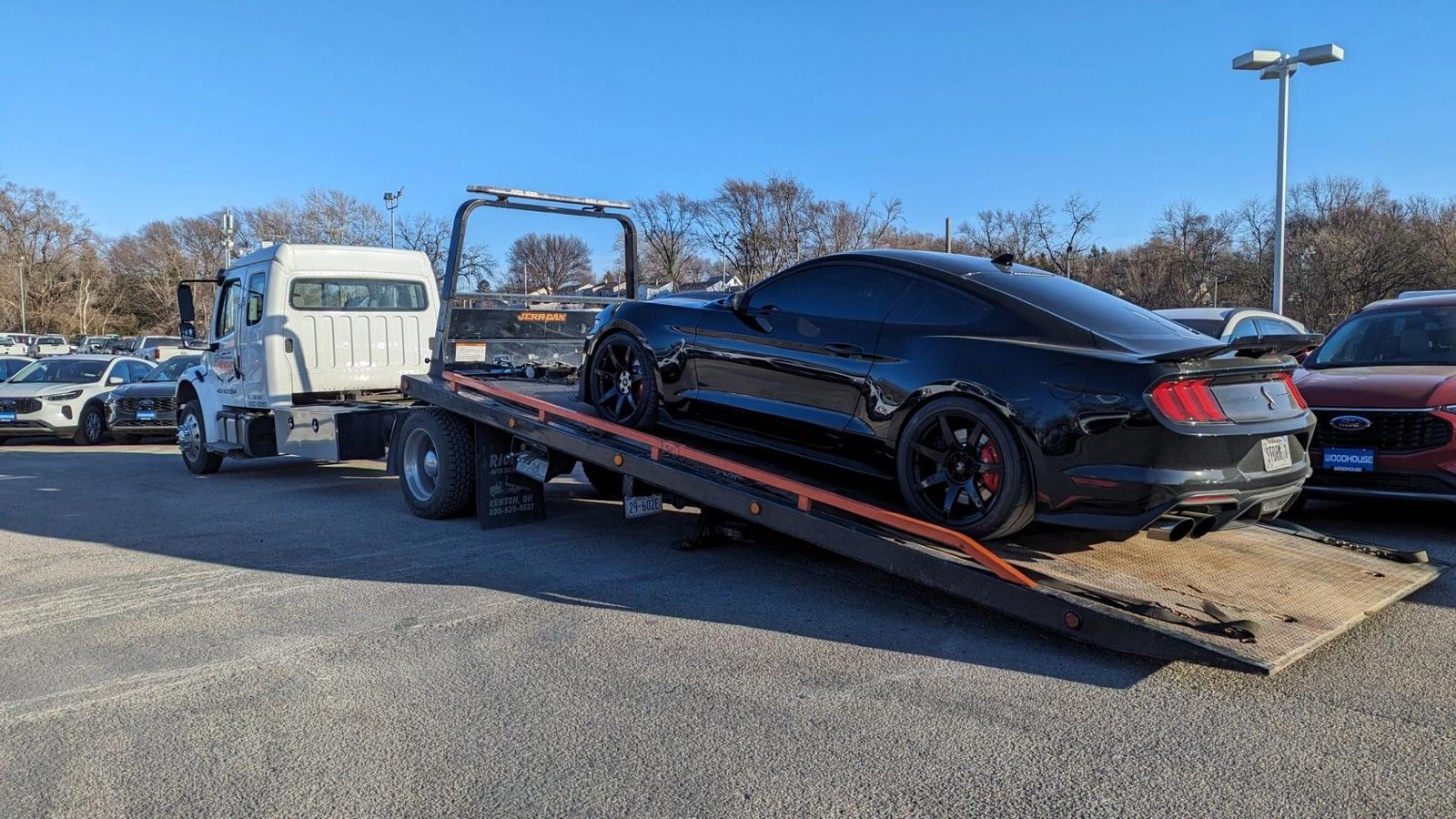
Extra ramps and a shallow load angle for lowered, modified and low clearance cars that a standard deck would scrape on the way up.
Extra ramps and a shallow load angle for lowered, modified and low clearance cars that a standard deck would scrape on the way up.
Lowered car towing is ordinary flatbed towing with the approach angle taken seriously. Calhoun Transport tows lowered, modified and low clearance vehicles across the Omaha metro and Washington County, Nebraska. The vehicle still rides on the deck like anything else. The difference is entirely in how it gets up there and how it comes back down.
This matters because the damage happens in the first three feet. A standard flatbed deck tilts to an angle that a factory sedan clears comfortably and a car with a front splitter, a low air dam or a two-inch drop does not. The car goes up, the nose catches, and now there is a scrape down the underside of a bumper that was fine when the truck arrived.
The fix is not skill, it is equipment plus knowing in advance. Extra ramps laid ahead of the deck flatten the angle the car actually sees. That gear only helps if it is on the truck, which is why the single most useful thing you can do is say the car is lowered when you call.
Three measurements decide whether a car loads cleanly, and only one of them is ride height. The first is approach angle, the steepest slope the front of the car can climb before the bumper touches. The second is breakover angle, which is what catches a long car at the point where the ramp meets the deck, and it is the one that surprises people. The third is rear overhang, which is what drags coming back off.
A long wheelbase car with a modest drop can be worse than a short car sitting very low, because the breakover point sits right under the middle of it. That is why how low it sits is only half the question and how long it is makes up the other half. Both get asked on the phone for a reason.
Factory cars trip this too. Plenty of performance trims, long-nose luxury sedans and modern EVs with full underbody trays have less usable clearance than their owners expect, and an undertray is easier to tear off than a bumper. If you have ever scraped going into a driveway, the car qualifies, whether or not anybody has touched the suspension.
Laid ahead of the deck so the angle the car climbs is shallower than the deck alone can offer. This is the whole service in one sentence.
Flat ground, and the truck positioned so the deck is not fighting a crown, a gutter or a driveway lip. Where the loading happens matters as much as the gear.
The car comes up under steady winch tension instead of being driven up under power, which keeps the approach controlled and slow.
Securement through the wheels and tires so nothing is pulling on the suspension, the body panels or a subframe.
If the car is on air and can be raised, tell us and it makes the whole job easier. If it has failed at its lowest setting, that is workable too, and worth mentioning before the truck arrives.
Rear overhang drags on the way off just as easily as the nose catches on the way up. The unload gets the same ramps and the same care.
On the phone, before dispatch. This is the step that decides whether the gear is on the truck when it arrives.
Flat, without a gutter lip or a steep driveway apron in the way. Sometimes that means moving the car a few feet first.
Extending the run so the angle the car climbs is shallower than the deck alone provides.
Steady tension, watched from the low corner, stopped if anything is close. Slow is the point.
Secured through the tires so the suspension is not loaded, and the same care taken unloading at the other end.
A good share of this work is not roadside at all. It is moving cars for people whose business is cars: a dealership shifting stock between lots, a performance shop that has finished a build, a collector moving something to or from storage, or a body shop that needs a car brought in without adding a mark to it.
Those jobs share a requirement that has nothing to do with breakdowns. The car has to arrive in exactly the condition it left in, and somebody is going to look closely at the front bumper when it does. That is a different standard from getting a stranded commuter to a garage, and it is worth saying that we know the difference.
If you move low cars regularly and you are tired of explaining the ramp situation every time, it is worth a conversation about standing work. It is a much easier job when the driver already knows what is coming.
Winter is the main event. Freeze and thaw cycles open up potholes across the Omaha metro every year, and the city's public works department has publicly described working in triage mode on pothole repairs late in the winter, with proper long-term patching waiting for warmer weather. A pothole that a truck rides over is what removes a splitter from a low car.
Plowed snow is the other one, and it is more common than people expect. A windrow left across a driveway entrance by a plow is compacted and unforgiving, and a lowered car meeting one at any speed catches on the underside rather than pushing through. The same is true of the ridge that builds at the end of an alley.
The metro's road geometry adds its own hazards. The Saddle Creek underpass beneath Dodge Street has flooded chronically since 1934, and standing water is a genuine risk for a car with a low air intake. Steep parking ramp entrances and older residential gutter lips in the pre-war neighbourhoods do the rest. None of that is exotic, but a car sitting two inches lower than stock meets all of it differently.
Across the Omaha metro and Washington County. Metro dealership and shop work makes up a lot of it, and the county roads produce the rest.
Pick your town below, or just call and tell us what the car is and how low it sits.
Very little is genuinely too low once the extra ramps come out, because they flatten the angle the car actually climbs. The problems come from arriving without that gear. Tell us it is lowered when you call and the answer is almost always that it loads fine.
A lot, if it still lifts. Raise it to its highest setting before the truck arrives and the job gets much simpler. If the system has failed and the car is stuck at its lowest setting, say so on the phone, because that is a different plan and it needs the full ramp setup.
No. Securement runs through the wheels and tires wherever the vehicle allows it, so nothing is pulling against the suspension, the subframe or the bodywork. On a lowered or modified car that is not a preference, it is the only sensible way to strap it.
Not usually, because a flatbed needs overhead clearance and a long flat run to lay ramps. What normally works is rolling the car out to flat ground first. Call and describe the space and we can work out whether it is possible before anybody drives over.
Yes, and it is worth saying so on the phone so everyone is working to the same standard. We do dealership, shop and collector work regularly. The car is winched rather than driven on, strapped at the wheels, and unloaded with the same ramps it went up.
Not much. A lowered car that will not start still gets winched up rather than driven up, which is how it would be loaded anyway. The only real difference is that steering it while it moves is not an option, so positioning the truck properly matters more.
Cars, pickups, medium duty trucks and equipment hauled on a flatbed deck, so nothing drags, scrapes or turns a wheel on the way.
Learn moreCareful recovery after a collision, secure storage for the vehicle, and straight paperwork for whoever is handling the claim.
Learn moreDead battery, flat tire or an empty tank. The problems that do not need a tow at all, handled where you are parked.
Learn moreTell us where you are, what you are driving, and what happened. Calling is fastest, and it is the only way to get a real price before anything moves.
Tell us what you need. Calling is the fastest way to reach us. You can also text, or send your details below.
Call 402-512-2304Fastest Text 402-512-2304Arrives from your number, so we can reply straight back