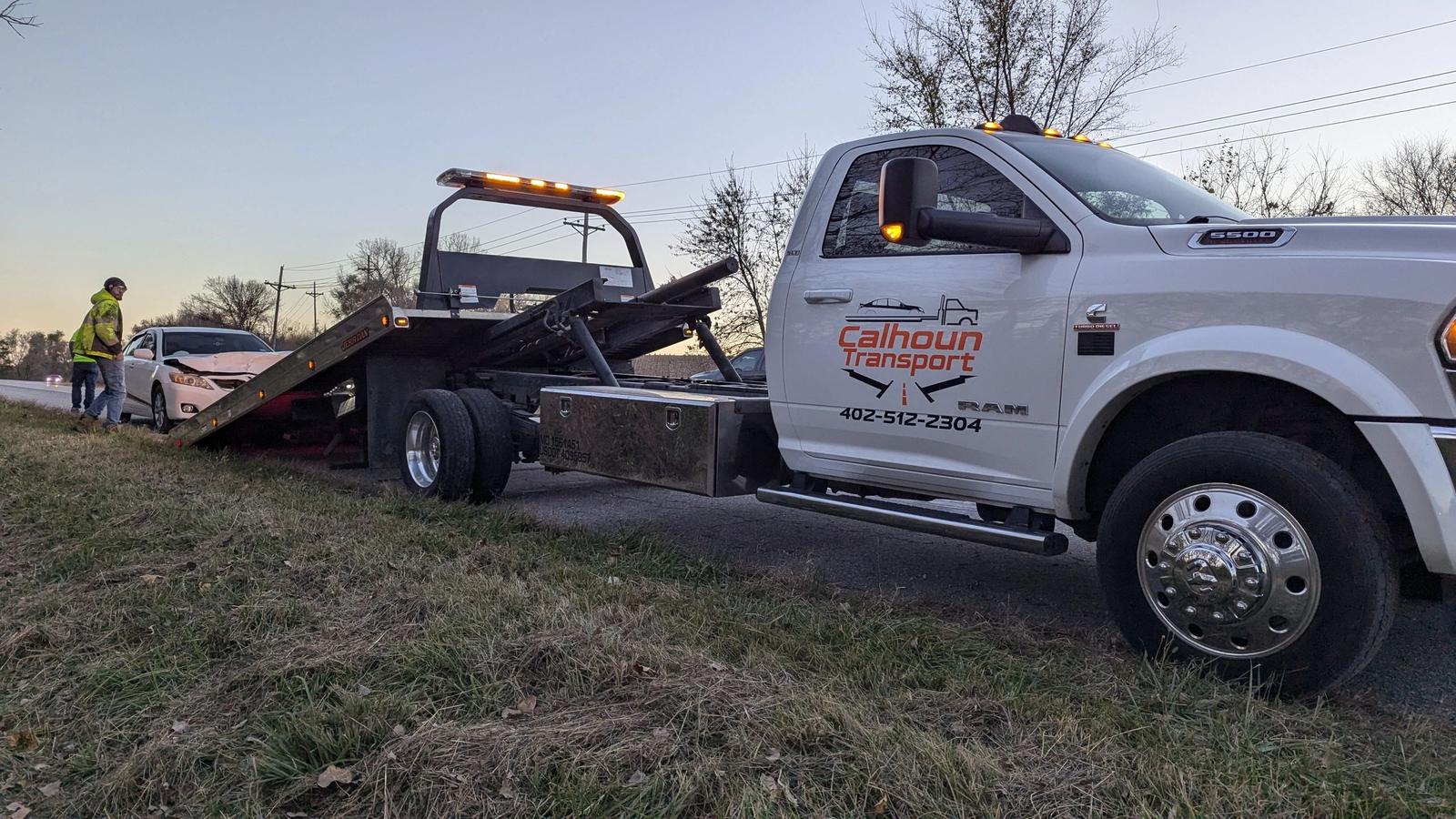
Most breakdowns we respond to didn't happen out of nowhere. A tire had been low for weeks, a battery had been slow to start for a month, or a belt had been squealing on cold mornings and nobody got around to checking it. A few basic checks, done on a regular schedule, catch most of these before they turn into a call for a tow on a rural stretch near Herman.
Why rural roads make small problems bigger
A worn belt or a soft tire is an inconvenience on a city street with three gas stations in five minutes. The same problem on a county road outside Herman, with long stretches between towns and spotty cell coverage in some spots, turns into a real wait. Nothing about rural driving causes more mechanical failures than city driving does. It just removes the safety net that makes a small failure a quick fix instead of a stranded hour.
That's the real argument for maintenance out here. It's not that the roads are harder on a vehicle. It's that a problem you'd shrug off ten minutes from home becomes a different kind of problem twenty miles from the nearest shop.
The checks that catch the most common failures
Tires. Check tread depth and pressure monthly, not just when a dashboard light comes on. Low pressure increases blowout risk and it's one of the easiest things to catch early with a simple gauge. Look at the sidewalls too. Cracking or bulging means the tire needs attention regardless of how much tread is left.
Battery. A battery that struggles to turn over on a cold morning is telling you something before it fails completely. Corrosion on the terminals, a slow crank, or dimming headlights at idle are all early signs. Batteries rarely fail without warning. They usually fail after warning you for a couple of weeks and getting ignored.
Belts and hoses. A squealing sound on startup, especially in cold weather, often means a belt is worn or loose. Hoses should be checked for soft spots, cracking, or bulging, since a hose failure can strand a vehicle just as fast as a dead battery.
Fluids. Oil, coolant, and brake fluid levels are quick to check and easy to let slide. Low coolant is a common cause of overheating on long rural drives where a vehicle spends more time at highway speed with less stop-and-go to let an engine cool.
Brakes. Grinding, pulling to one side, or a soft pedal are all signs worth addressing before a longer trip, not after.
A simple schedule instead of a one-time check
The checks above only work if they happen more than once. A single inspection catches whatever's already wrong that day. A schedule catches problems as they develop. A reasonable version of this doesn't need to be complicated: tires and fluid levels once a month, belts and hoses whenever the hood is already open for something else, and a slightly closer look at all of it before a longer trip or before the weather turns. The goal is to notice a change, not to memorize a spec sheet. A tire that was fine three weeks ago and is noticeably softer now is more useful information than knowing the exact recommended PSI.
Keeping a simple log helps too, even if it's just a note on your phone. "Battery seemed slow this morning" written down in October is a lot more useful in December than trying to remember whether it's been happening for one week or six.
What a breakdown call usually tells us afterward
When we get a call for a dead battery or a flat that turned into a real problem, the story is almost always the same. Something had been slightly off for a while, it got attributed to the cold, to a rough road, to being tired and not noticing, and then one morning it didn't start or the tire finally gave out. We're not saying this to make anyone feel bad about it. It's just useful to know that the pattern is that predictable, because it means the fix is usually just paying attention a little earlier, not some deeper mechanical mystery.
What to actually do with this list
None of this requires a mechanic's toolkit. A tire gauge, a flashlight for checking belts and hoses, and paying attention to how a vehicle sounds and feels compared to normal covers most of it. The goal isn't to catch everything. It's to catch the handful of things that turn into a breakdown if they're ignored for another month.
If something does turn into a bigger repair than a driveway check can fix, that's a different problem than what this list is for. But most of what leads to a call for roadside assistance starts as something that showed a warning sign well before it actually failed.
When maintenance isn't enough
Sometimes a vehicle does everything right and still ends up stuck. Weather, an unexpected mechanical failure, or something that simply couldn't have been caught ahead of time still happens, and that's a different situation than a neglected belt or a battery nobody checked. Whether that means a straightforward flatbed tow or getting pulled out of a ditch, when that happens on a road near Herman or anywhere else in the area, that's what we're here for.
Frequently Asked Questions
How often should I check my tire pressure?
Monthly is a reasonable baseline, and before any longer highway trip. Temperature swings, which are common here, change tire pressure even without a leak.
What's the most common reason vehicles break down on rural roads?
Battery failure and tire issues are the two we see most often, largely because both give warning signs that are easy to miss if nobody's specifically checking for them.
Can a bad belt really strand a vehicle?
Yes. A belt that fails completely can take out the alternator, power steering, or cooling system depending on what it drives, any of which can leave a vehicle undrivable.
How do I know if my battery is close to failing?
A slow crank on startup, corrosion visible on the terminals, or headlights that dim noticeably at idle are all signs worth acting on before the battery fails completely.
Is there anything specific to check before a longer drive through rural Nebraska?
Tire condition and pressure, coolant level, and how the vehicle sounds on startup cover most of what matters. Cell coverage gaps mean it's worth being more cautious out here than you might be for the same trip closer to town.
Is it worth keeping a written log of small issues instead of just remembering them?
Yes. A quick note whenever something seems slightly off, a slow start, a new noise, a soft tire, makes it much easier to tell whether a problem is getting worse or was a one-time fluke. Memory alone tends to smooth over how long something has actually been happening.
If you do end up stuck
Maintenance catches most problems, but not all of them. If you're stranded near Herman or anywhere else we cover, contact us and we'll get someone out to you.