To jump start a car safely near Arlington, connect the red clamps to the two positive terminals, connect one black clamp to the good battery's negative terminal, then clamp the last black cable to bare metal on the dead car's engine or frame, away from the battery. Start the working car, wait a few minutes, then start the dead one. If it will not start after a few tries, stop and call for help.
Why Getting This Right Matters Out Here
In town, a failed jump is a small annoyance. You walk to a gas station or knock on a door. On the county roads around Arlington, the nearest second car can be a long way off, and a dead battery in a farm driveway or at a pull-off is a different kind of problem. Knowing the steps, and knowing when to quit, saves time and keeps you from damaging anything.
A jump start only borrows power. It does not fix whatever drained the battery. That is why some cars start fine and then die again an hour later, and why the second half of this post matters as much as the first.
What You Need Before You Start
- Jumper cables or a portable jump pack. Cables need a second running vehicle. A jump pack does not, which is a real advantage on a quiet road.
- Your owner's manual. It shows where the battery is and any vehicle-specific rules. Some cars keep the battery in the trunk or under a seat, and some have dedicated jump terminals under the hood.
- Gloves and eye protection if you have them. Batteries can vent gas and spark.
Park the working car close enough for the cables to reach, but do not let the two vehicles touch. Turn both engines off, set both parking brakes, and turn off lights, radio and other accessories.
The Steps, in Order
Follow this sequence. The order is what keeps sparks away from the battery. It matches the steps in Good Sam Roadside's jump start guide.
1. Red clamp to the dead battery's positive terminal
Find the positive terminal, usually marked with a plus sign and often under a red cover.
2. Other red clamp to the working battery's positive terminal
Make sure the clamps do not touch each other or any other metal once they are connected.
3. Black clamp to the working battery's negative terminal
This is the first black connection, and it goes on the good battery.
4. Last black clamp to bare metal on the dead car
Do not put the final clamp on the dead battery's negative terminal. Clamp it to an unpainted metal surface on the engine block or frame of the dead car, away from the battery. This is the one most people get wrong, and it is the connection most likely to throw a spark, so it belongs away from the battery.
5. Start the working car and wait
Let the working engine run for a few minutes so it can push some charge into the weak battery.
6. Start the dead car
If it starts, leave it running. If it clicks but does not start, wait a minute and try again.
7. Remove the cables in reverse order
Take off the last black clamp first, then the black clamp on the good battery, then the red clamp on the good battery, then the red clamp on the formerly dead battery.
After It Starts: Keep It Running
Once the car is running, do not shut it off right away. Let it run, or better, drive it, for at least 20 to 30 minutes so the alternator can recharge the battery, as the same Good Sam Roadside guide advises. A short trip to the end of the road and back is not enough.
If the car starts and then dies again the next morning, the battery is likely at the end of its life, or something is draining it or not charging it. At that point a second jump is only a delay.
When You Should Not Jump a Car
Skip the jump and call for help if you see any of these. Good Sam Roadside lists the same warning signs.
- Cracks, bulges or leaks on the battery case
- Fluid leaking around the battery
- A burning or sulfur-like smell
- A battery that may be frozen. This matters in a Nebraska winter. A frozen battery can be dangerous to jump.
Hybrids and electric vehicles have their own rules. Check the manual before you connect anything.
When a Jump Will Not Hold
If you have made three or four proper attempts over about fifteen minutes and the car still will not start, stop. The problem may be the starter, the alternator, or a battery that cannot be revived, which is the same guidance Good Sam Roadside gives. More attempts will not change that.
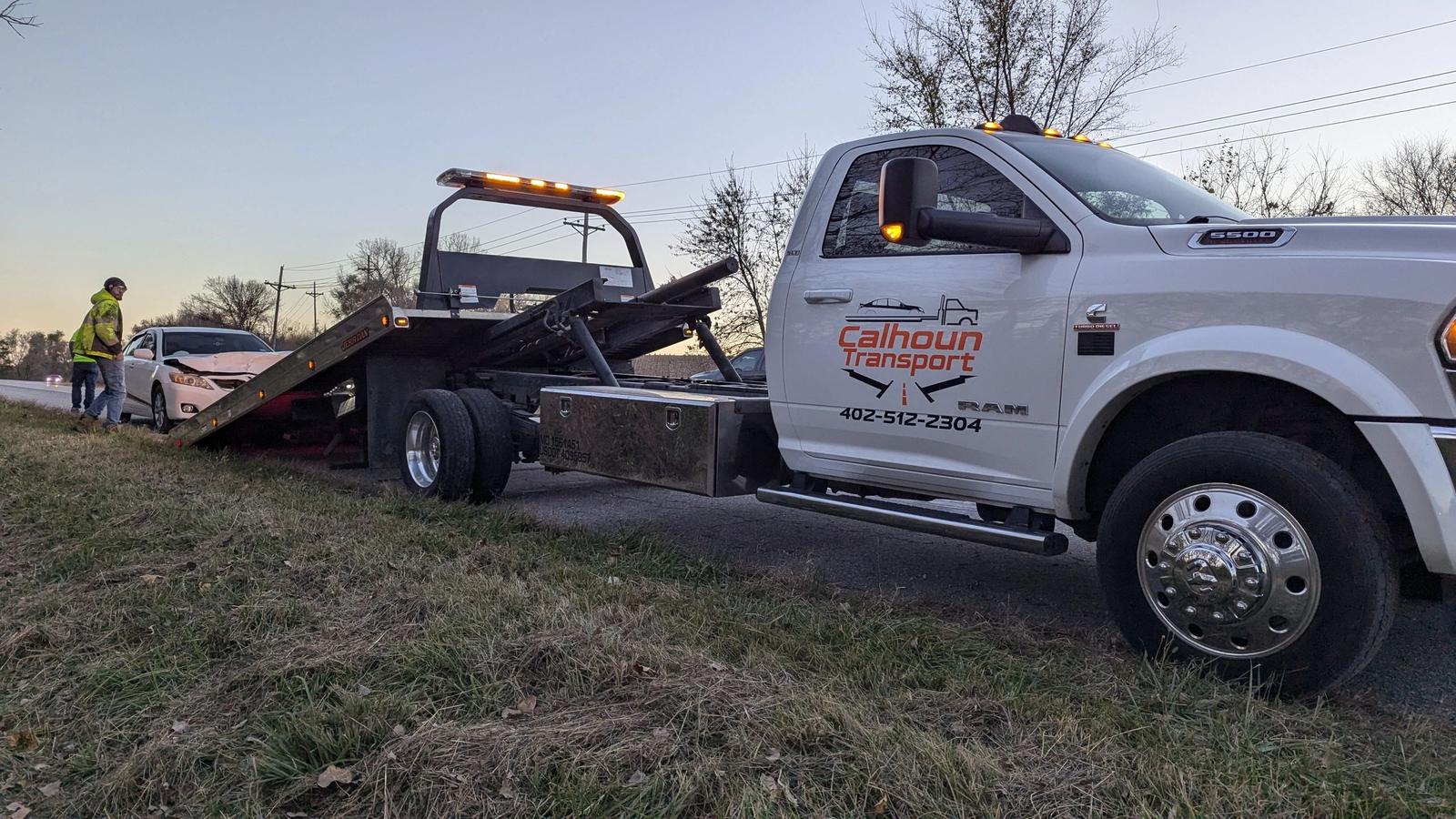
That is when it makes sense to call. Roadside assistance can handle a jump start on the spot, and if the problem is bigger than a battery, a flatbed tow gets the car to a shop without making a failing alternator worse.
Why Arlington Drivers Should Think Ahead
The stretches between Arlington and its neighbors are open, and help is not always a short walk away. A few habits make a dead battery less likely to catch you out:
- Carry a jump pack instead of relying on cables and a passing stranger.
- Test an older battery before the first hard freeze, since cold mornings are when weak batteries finally quit. We cover that in why car batteries die on the first cold morning.
- Watch for slow starts. A slow crank is a warning, not a quirk.
- Know where you are. If you do have to call, give the road name, the nearest crossroad and your direction of travel. Our guide to where to stand while you wait covers staying safe until help arrives.
Frequently Asked Questions
What is the right order for jumper cables?
Red to the dead battery's positive terminal, red to the working battery's positive terminal, black to the working battery's negative terminal, then black to bare metal on the dead car's engine or frame. Remove them in the reverse order.
Where does the last black clamp go?
On an unpainted metal surface on the engine block or frame of the dead car, away from the battery. Do not attach it to the dead battery's negative terminal. This keeps the final connection, and any spark, away from the battery.
How long should I run the car after a jump start?
At least 20 to 30 minutes, ideally driving, so the alternator can recharge the battery. Shutting the engine off right away often leaves you stuck again.
Is it safe to jump a frozen or cracked battery?
No. If the case is cracked, bulging or leaking, or the battery may be frozen, do not attempt a jump. Call for roadside help instead.
How many times can I try before I stop?
If three or four proper attempts over about fifteen minutes do not work, stop. The starter, the alternator or the battery itself may be the problem, and more tries will not fix it.
Stuck Near Arlington?
If a jump will not do it, Calhoun Transport covers roadside help and flatbed towing around Arlington, the rest of Washington County and the Omaha metro. See our Arlington service area, call 402-512-2304 with your location and what the car is doing, or reach us through our contact page.