To check your tires before winter near Fort Calhoun, measure the pressure when the tires are cold, compare it with the number on the label inside the driver's door, push a penny into the tread to check the depth, and look over the sidewalls and the spare. It takes about fifteen minutes in the driveway, and it is far easier than doing the same job on a gravel shoulder in the dark with a flat tire and a long wait ahead of you.
Why Tires Matter More Out Here
Around Fort Calhoun, plenty of driving happens on county roads where help is not around the corner. A tire that is a little low or worn thin in town is an annoyance. The same tire on a rural road at dusk can turn into a call for a tow.
A tire that looked fine in September may not be fine by the first hard frost. Checking now, before the weather turns, gives you time to fix what you find.
Check Tire Pressure When the Tires Are Cold
The National Highway Traffic Safety Administration says to check the pressure of all tires, including your spare, at least once a month when the tires are cold, meaning the car has not been driven for at least three hours.
Here is the simple way to do it:
- Check first thing in the morning, before the first drive, or after the car has sat for several hours.
- Use a gauge you trust. A basic hand gauge works fine.
- Find the right number. The recommended pressure is on the Tire and Loading Information Label on the driver's side door edge, or in your owner's manual.
- Ignore the number molded into the tire. The same NHTSA page says the correct pressure is what the vehicle manufacturer lists, not what is printed on the tire itself.
- Add air to match the label, then recheck the gauge.
If you check a tire right after driving, the reading will be higher than the true cold pressure, so measure cold or allow for the extra pressure in a warm tire.
Do the Penny Test on the Tread
Tread is what grips wet leaves, frost and the first skim of snow. NHTSA describes an easy check: place a penny in the tread with Lincoln's head upside down and facing you. If you can see the top of Lincoln's head, the tire needs replacing. NHTSA also says tires are not safe and should be replaced when the tread is worn down to 2/32 of an inch.
Do this in several spots across each tire, not just one. Tires can wear unevenly, so the outer edge may be thin while the middle looks fine. If one tire is much more worn than the others, have a tire shop look at why.
Look at the Sidewalls and Valve Stems
Pressure and tread are only part of the picture. Walk around the vehicle and look at each tire up close.
- Bulges or bubbles on the sidewall mean the tire is damaged inside and should not be driven on for long.
- Cracks in the rubber, especially on an older tire, are a warning sign.
- Nails, screws or stones stuck in the tread can cause a slow leak that shows up days later.
- Valve stem caps keep dirt and moisture out. A missing cap is an easy fix.
A tire that loses a few pounds every week usually has a slow leak. Do not just keep adding air. Have the leak found and repaired, or it will pick the worst moment to give out.
Do Not Forget the Spare
A spare is only useful if it holds air and you can get to it. NHTSA includes the spare in its monthly pressure check for that reason. Pull it out at least once this fall and look at three things:
1. Is it inflated? A spare that has sat for a year is often low.
2. Do you have the jack and lug wrench? Make sure both are in the vehicle and that the wrench fits your lug nuts.
3. Can you reach everything? Some vehicles bury the spare under cargo or use a hoist under the frame that is hard to work when it is rusty or frozen.
If your vehicle uses a sealant kit or an inflator instead of a spare, read the instructions now rather than at the roadside. Those kits only handle small punctures, so a damaged sidewall still means a call for help.
What to Do if You Get a Flat Anyway
Even with good habits, a flat can happen. If it does near Fort Calhoun, keep it simple and safe.
1. Slow down and ease off the road. Hold the wheel steady and avoid hard braking.
2. Get as far from traffic as you can. A wide, level spot on a county road is better than the edge of a hill or a curve.
3. Turn on your hazard lights and stay buckled in until you decide what to do.
4. Decide whether to change it yourself. On a soft gravel shoulder, in the dark or in wind, waiting for help is often the safer choice.
5. Call with clear information. Our guide on what to tell the tow operator when you call lists what helps a dispatcher get to you faster.
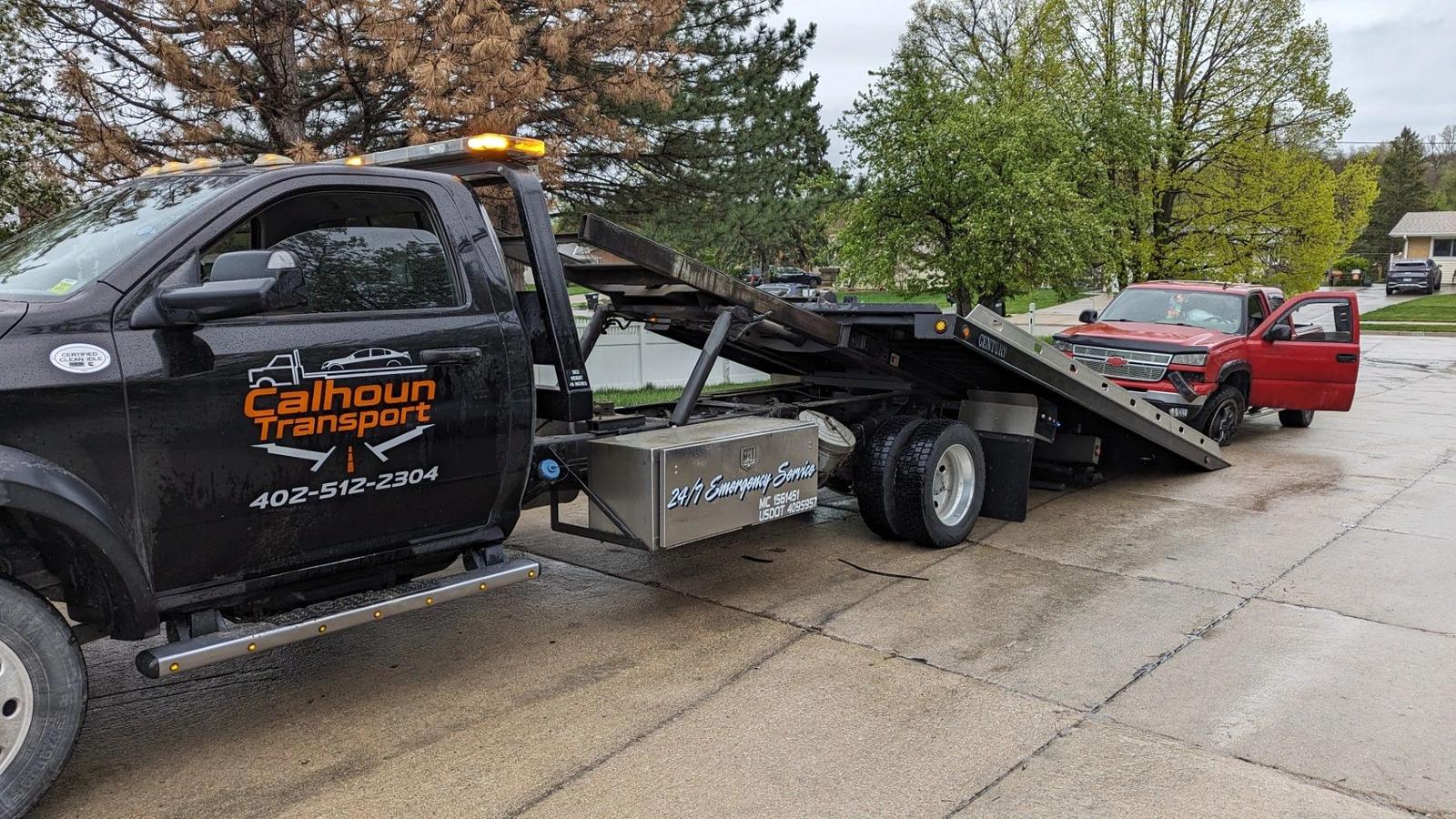
If the tire is shredded or the wheel is damaged, driving on it can hurt the rim and turn a simple repair into a bigger one. A flatbed takes the vehicle without putting more miles on the damaged wheel.
Pair the Tire Check With a Battery Check
Cold weather is hard on tires and batteries at the same time. While you have the hood and the trunk open, it is a good moment to think about the battery too. Our post on why car batteries die on the first cold morning explains what to watch for, so one afternoon of checking can prevent both of the most common cold weather calls.
Frequently Asked Questions
How often should I check my tire pressure?
At least once a month, and that includes the spare. The National Highway Traffic Safety Administration says to check when the tires are cold, meaning the car has not been driven for at least three hours.
Where do I find the right tire pressure for my vehicle?
Look on the Tire and Loading Information Label on the driver's side door edge, or in your owner's manual. Use the number the vehicle manufacturer lists, not the number printed on the tire itself.
How do I know if my tread is too worn?
Place a penny in the tread with Lincoln's head upside down and facing you. If you can see the top of his head, replace the tire. NHTSA says tires are not safe once the tread wears down to 2/32 of an inch.
Should I check the pressure right after I drive?
Not if you can avoid it. A warm tire reads higher than its true cold pressure. Check before you drive, or after the vehicle has sat for at least three hours.
What should I do if I get a flat on a rural road?
Ease off the road as far from traffic as you can, turn on your hazard lights and stay buckled in while you decide. If the shoulder is soft, it is dark or the tire is badly damaged, call for help instead of changing it yourself.
Need a Hand Near Fort Calhoun?
Calhoun Transport is based in Fort Calhoun and runs flatbed towing and roadside help across Washington County and the Omaha metro. See our Fort Calhoun service area, learn what roadside assistance covers, or read about flatbed towing for a vehicle that cannot be driven. Call 402-512-2304 with your location and what happened, or reach us through our contact page.